TLDR
Spigot systems mount glass with discrete stainless steel fittings that maximize sightlines but cost more per linear foot. Channel systems use a continuous aluminum track that spreads structural load and costs less on longer runs. Your deck structure, budget, and view priorities determine which system is the better fit.
Key Takeaways
- -Spigot systems cost $350-$550 per linear foot installed; channel systems run $280-$450 per linear foot in the GTA
- -Spigots create the most unobstructed view because only small metal fittings touch the glass
- -Channel systems distribute load along the full run, making them forgiving on older or lighter deck framing
- -Single-panel replacement is simpler with spigots; channel systems may require removing adjacent panels
- -Both systems require 12mm tempered safety glass and must meet Ontario Building Code guardrail height of 1,070mm for elevated decks
- -Many GTA homeowners combine both systems on the same project to balance cost and aesthetics

Joseph Cariati
Founder & Owner of HMJ Railings. With over 10 years of experience and 2,000+ completed projects, Joseph and the HMJ team have built lasting relationships with homeowners and builders across Vaughan and the GTA, earning a reputation for reliability and quality work.
What Makes a Glass Railing "Frameless"
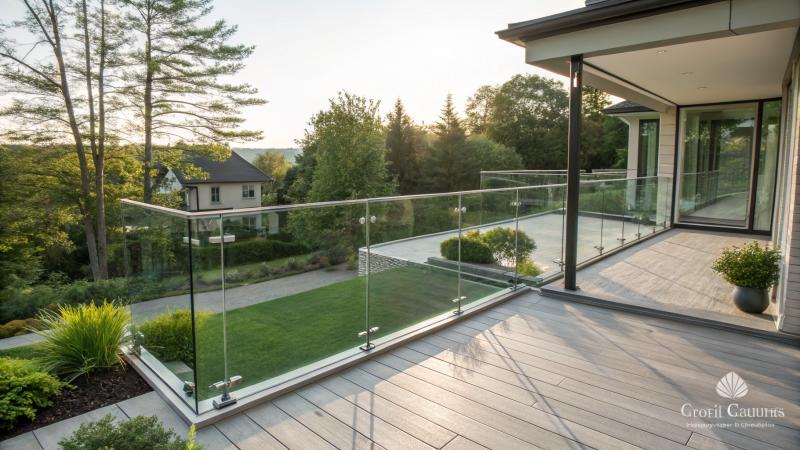
A frameless glass railing uses tempered safety glass panels as the primary barrier. No vertical posts interrupt the glass. No horizontal rails frame the top or bottom edges. The glass itself does the structural work.
The difference between spigot and channel comes down to how the glass connects to your deck. Spigots grip the glass at discrete points. Channels capture the glass along a continuous track. Both produce the same clean look from a distance, but they behave differently in cost, maintenance, and structural demand.
Ontario installations use 12mm tempered glass as standard. The Ontario Building Code requires guardrails to reach 1,070mm (42 inches) on any deck surface more than 1,800mm above grade. Both systems meet this requirement when installed correctly.
How Spigot Systems Work
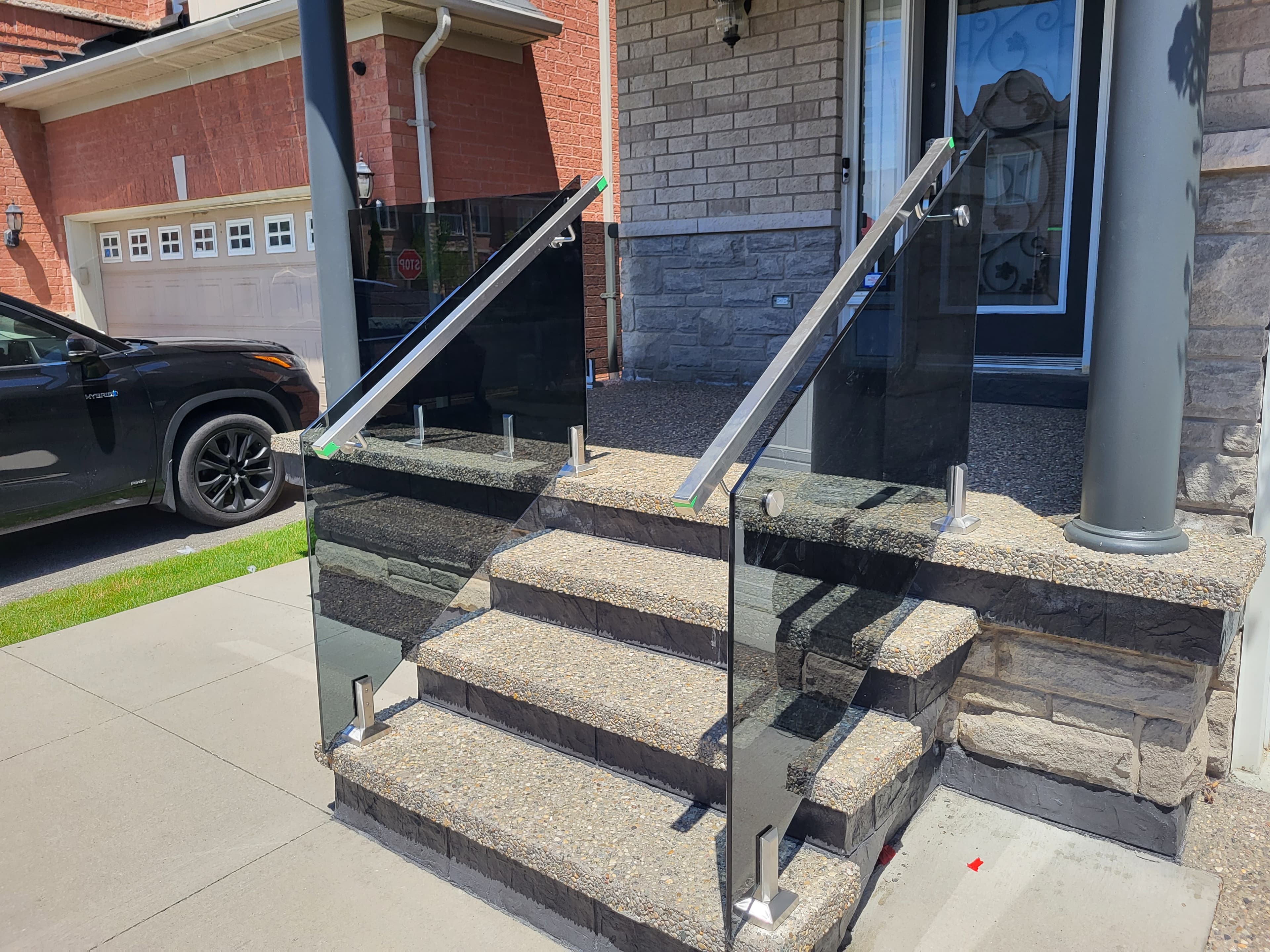
A spigot is a small metal fitting, usually marine-grade 316 stainless steel, that bolts through your deck surface and grips the bottom edge of the glass panel. Each panel sits on two to four spigots depending on its width.
The hardware is small. Round, square, or low-profile designs are available. From your chair on the deck, you see glass and very little else. This is why spigot systems are the first choice for properties where the view matters most.
Where Spigots Perform Best
Spigots excel on decks with strong framing and a view worth protecting. Ravine lots in Vaughan, pool enclosures in Woodbridge, and elevated balconies throughout Toronto are common applications. The point-mounted design also works well on concrete surfaces and can be side-mounted when the deck edge does not allow top mounting.
If a panel is damaged, you unbolt the spigots and lift the glass out. Adjacent panels stay in place. This makes repairs straightforward compared to channel systems where panels are captured in sequence.
Where Spigots Cost You More
Quality 316 stainless spigots are not cheap. Two to four fittings per panel add up quickly on a long railing run. Expect $350 to $550 per linear foot installed in the GTA, with premium finishes like matte black or brushed gold at the higher end.
Spigots also transfer all load into the deck at concentrated points. Your framing needs to handle that. On older decks, this sometimes means reinforcing joists or adding blocking before installation begins.
How Channel Systems Work
A channel system, sometimes called a base shoe or u-channel, is a continuous aluminum or stainless steel track that runs along the entire railing line. The glass panels slot down into this track and are secured with setting blocks and either pressure fittings or structural silicone.
The channel sits low against the deck surface. Glass rises directly from it. The visual effect is clean and integrated, though slightly more visible than spigots when viewed close up.
Where Channels Perform Best
Channels spread the structural load along the entire run instead of concentrating it at points. This makes them a more forgiving choice on lighter deck framing or structures that cannot handle the concentrated forces spigots require.
On longer railing runs, the aluminum extrusion costs less per linear foot than the equivalent number of stainless spigots. Expect $280 to $450 per linear foot installed. For large decks or multi-sided enclosures, this difference adds up.
Where Channels Demand Attention
The track collects rainwater, leaf debris, and ice. In Ontario's freeze-thaw cycle, standing water in the channel accelerates corrosion if drainage holes are blocked. Quality installations include weep holes and proper slope, but this requires careful workmanship during installation.
Replacing a single damaged panel can require removing adjacent panels first, since the glass is captured in a continuous track. This increases labour cost for repairs compared to the bolt-on, bolt-off simplicity of spigots.
Side-by-Side: Five Factors That Decide the Right System
Cost Per Linear Foot
Spigot: $350-$550. Channel: $280-$450. The gap widens on longer runs where channel extrusions provide better material efficiency than individual stainless fittings.
View Clarity
Spigot wins. The fittings are small and low. Channel systems add a visible 50-75mm aluminum track at the base. From a standing position both look frameless, but seated at deck level the spigot system disappears more completely.
Structural Demand
Channel wins. Distributed load along the full run is easier on deck framing than concentrated point loads from spigots. If your deck was not built with glass railings in mind, channel is often the safer choice without structural upgrades.
Maintenance
Spigots need annual set-screw checks and a stainless polish. Channels need drainage clearing each spring. Both need glass cleaning twice a year. Neither system is maintenance-free, but spigots have fewer failure points related to water and debris.
Repairability
Spigot wins. Unbolt the fittings, lift out the damaged panel, drop in the replacement. Channel systems often require pulling adjacent panels to access the damaged one, which adds time and cost to the repair.
What 2,000 Railing Projects Taught Us About Choosing a System
After installing frameless glass on over 2,000 residential projects across the GTA, a clear pattern emerges. Homeowners who prioritize the view and have a solid deck structure are happiest with spigots. Homeowners with longer runs, tighter budgets, or older deck framing get better long-term value from channels.
The approach that works for most GTA homeowners is a practical combination. Spigots on the primary viewing side where sightlines matter most. Channels on secondary runs and return walls where the cost savings add up without compromising the overall look. A skilled installer blends both systems on a single deck and the transition is invisible.
Frameless Glass in the GTA: Local Considerations
Ontario's climate puts specific demands on frameless glass systems. The freeze-thaw cycle from November through March stresses both hardware and mounting points. Salt air near Lake Ontario accelerates corrosion on lower-grade stainless steel. Use 316 marine-grade for spigots. For channels, powder-coated aluminum handles GTA winters well if drainage is maintained.
Permit requirements for railing installation vary by municipality across the GTA. In Vaughan, new deck railings or replacements that change the railing type typically require a building permit. Your installer should confirm requirements with your local building department before work begins.
Properties in communities like Woodbridge, Maple, Kleinburg, and Richmond Hill frequently have ravine or conservation lots where unobstructed views add significant property value. On these lots, the premium for spigot systems often pays for itself in resale appeal.
Which System Should You Choose
Choose spigots if your deck framing is solid, your budget allows $350+ per linear foot, and the view from your deck is worth protecting with minimal hardware. Spigots are the right call for shorter runs, pool fencing, and elevated balconies where every inch of sightline counts.
Choose channels if you have a longer railing run, your deck framing is lighter or older, or you want to keep the project under $450 per linear foot. Channels deliver the frameless look at a lower price point and work well where the base of the glass is not the primary focal point.
The best results come from an on-site assessment. Your deck height, framing condition, substrate material, and view angles all factor into which system delivers the most value. Getting a professional measurement before committing saves time, money, and regret.
Related Services
Ready to upgrade? Learn more about our frameless glass railing installation across the GTA, or compare with our framed glass railing systems. Vaughan homeowners can find specific information on our Vaughan glass railing page.
Frequently Asked Questions
What is the cost difference between spigot and channel frameless glass railings?
Spigot systems typically cost $350-$550 per linear foot installed in the GTA. Channel systems run $280-$450 per linear foot. The gap increases on longer railing runs where channel extrusions offer better material efficiency.
Can you mix spigot and channel systems on the same deck?
Yes. Many homeowners use spigots on the main viewing side and channels on secondary runs to balance aesthetics and budget. A skilled installer makes the transition between systems invisible.
Which frameless glass system is easier to repair if a panel breaks?
Spigot systems. You unbolt the fittings and lift out the damaged panel without disturbing adjacent glass. Channel systems often require removing neighbouring panels to access the broken one.
Do frameless glass railings meet Ontario Building Code requirements?
Both spigot and channel systems meet Ontario Building Code requirements when installed correctly with 12mm tempered safety glass and a minimum guardrail height of 1,070mm for elevated surfaces.
How do you maintain frameless glass railings through Ontario winters?
Clean glass twice yearly with mild soap. Check spigot set screws annually for tightness. Clear channel drainage holes each spring. Apply stainless steel protectant to hardware once a year to prevent surface oxidation.
Which frameless glass system works better on older decks?
Channel systems are more forgiving on older or lighter deck framing because they distribute the structural load along the full run instead of concentrating it at individual bolt points like spigots do.
About the Author

Joseph Cariati
Founder & Owner of HMJ Railings. With over 10 years of experience and 2,000+ completed projects, Joseph and the HMJ team have built lasting relationships with homeowners and builders across Vaughan and the GTA, earning a reputation for reliability and quality work.