TLDR
Winterizing aluminum and glass railings means washing them in fall, touching up chips, keeping salt and snow away from the base, and rinsing everything in spring. Road salt and freeze-thaw cycles damage railings at the seams and hardware, not the flat surfaces. A short routine protects the finish and keeps GTA railings looking new for years.
Key Takeaways
- -Wash aluminum and glass railings in fall so dirt does not hold salt against the finish all winter.
- -Touch up chips in powder coating before the first freeze, because bare aluminum is where salt pitting starts.
- -Spread ice melt on walking surfaces only and wipe any salt off the railing base with a damp cloth.
- -Never use hot water or a scraper on frozen glass panels.
- -Rinse salt from seams, base plates and channels on the first mild spring day.
- -Check posts, base covers and glass hardware in spring and book an inspection if anything has moved.

Joseph Cariati
Founder & Owner of HMJ Railings. With over 10 years of experience and 2,000+ completed projects, Joseph and the HMJ team have built lasting relationships with homeowners and builders across Vaughan and the GTA, earning a reputation for reliability and quality work.
Winter does three things to a railing: it coats it in salt, it traps water in every seam, and it freezes that water over and over. A short fall routine and a spring rinse stop all three from turning into permanent damage. This guide covers the steps we use on aluminum and glass railings across Vaughan and the GTA.
What Does Winterizing a Railing Mean?
Winterizing a railing means reducing how much salt, standing water and ice contact the finish and hardware before and during the cold months. It is a set of small tasks, not a rebuild. The goal is a railing that looks the same in April as it did in October.
A powder-coated aluminum railing does not rust, but the coating can chip and the bare metal underneath can pit when salt sits on it. Glass does not corrode, but dried salt film clouds it and traps grit that scratches during cleaning. Fasteners, base plates and glass hardware are the parts most exposed to trapped meltwater.
Why Do GTA Winters Damage Railings?
Road Salt and Ice Melt Sit on the Finish
Salt dissolves into a brine that creeps into base plate edges and post collars. When the brine dries, it leaves a white crust that holds moisture against the surface. On a chipped section of coating, that moisture is what starts pitting.
Freeze-Thaw Cycles Pry Seams Open
The GTA regularly swings above and below zero in a single week. Water that enters a seam on a mild afternoon freezes overnight and expands. Repeated cycles widen small gaps around base covers, channels and caps.
How to Winterize Your Railing Before the First Freeze
Step 1: Wash Off Summer Grime
Wash the full railing with lukewarm water and a mild dish soap solution. Use a soft cloth or sponge, never steel wool or an abrasive pad. Dirt left on the finish holds moisture and salt against it all winter.
Step 2: Inspect the Coating and Hardware
Walk the length of the railing and look for chips, scratches and exposed metal. Check that posts do not move when you push on them and that caps and base covers are seated. Note anything loose so it can be fixed before snow hides it.
Step 3: Touch Up Chips and Add a Protective Coat
Seal small chips with a touch-up paint matched to your railing colour. Once the finish is clean and dry, a thin coat of automotive paste wax on powder-coated aluminum gives salt a harder surface to cling to. Skip wax on glass.
How to Handle Snow and Ice During the Winter
Clear Snow Away From the Railing
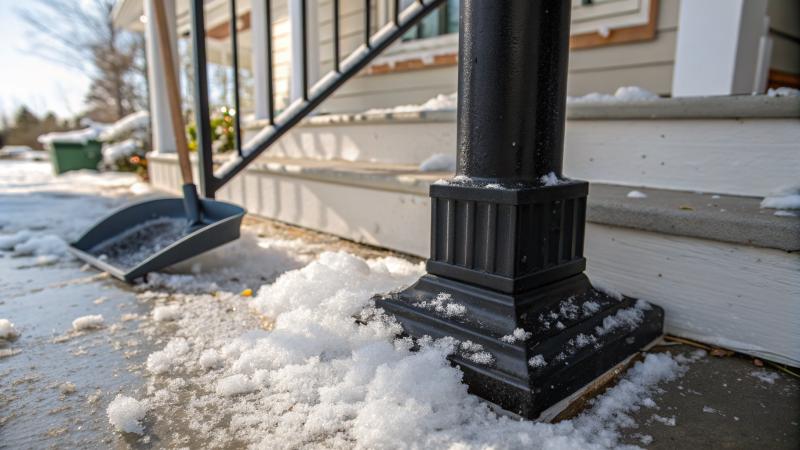
Shovel snow from the base of the railing instead of letting it pile against posts and glass. A plastic shovel is safer for the finish than a metal one. Snow packed against a base shoe or channel melts, refreezes and loads the hardware.
Choose Ice Melt Carefully
Keep rock salt and ice melt off the railing base and spread it only on the walking surface. Calcium magnesium acetate or a sand and grit mix is gentler on finishes than sodium chloride, though no ice melt is harmless when it is left to sit. If salt lands on the railing, wipe it off with a damp cloth.
Never Chip Ice Off Glass
Do not scrape or pour hot water on frozen glass panels. Hot water on cold glass creates a sudden temperature difference that can crack a panel. Let ice melt on its own, or use lukewarm water on the surface only.
What Joseph Cariati Sees on Winter Service Calls
After more than 10 years and over 2,000 completed projects, Joseph Cariati, Founder and Owner of HMJ Railings, has seen the same pattern repeatedly.
“The damage we see in spring almost always starts in one place: salt sitting at the base of a post for weeks. A five-minute rinse on a mild day does more than any product you can buy.” - Joseph Cariati, Founder & Owner, HMJ Railings
Why Vaughan and GTA Homes Need a Different Routine
Homes in Vaughan, Toronto, Mississauga and the surrounding GTA face heavy municipal salting, plus homeowners salting their own steps and driveways. Spray from plowed roads can reach front porch railings that are close to the street. Rooftop terraces and balconies add wind-driven snow that settles against glass panels.
Aluminum railings are a common choice here because the material does not rust, and glass railings are popular for their clear sightlines. Both do best when the routine above is part of normal home upkeep.
How to Rinse and Inspect Your Railing in Spring
Rinse Away the Winter Residue
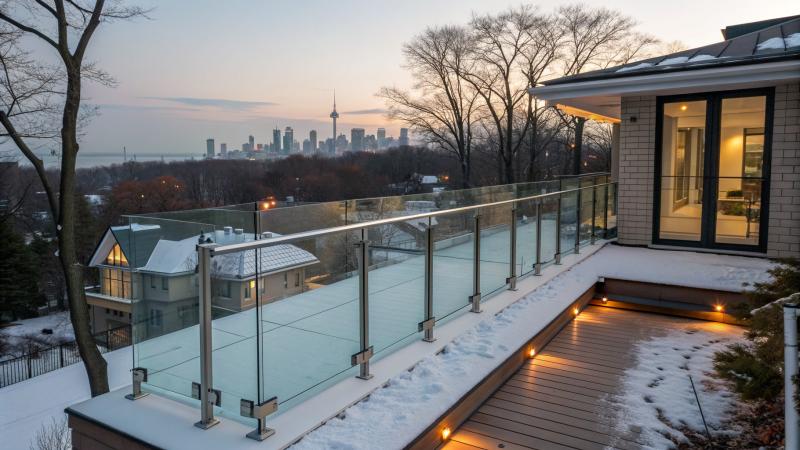
On the first mild day above freezing, rinse the whole railing with lukewarm water to flush salt from seams, base plates and channels. Follow with a soft cloth and mild soap, then rinse again. For glass, finish with a squeegee or microfibre cloth to avoid streaks.
Check for Damage and Book a Service Visit if Needed
Look again for chips, bare metal, loose posts or cloudy seals around glass. Small chips can be touched up the same day. If a post moves, a base cover has cracked or glass hardware looks corroded, have it inspected before summer use.
Frequently Asked Questions
How do I protect an aluminum railing from road salt?
Wash the railing in fall, touch up any chips, and apply a thin coat of paste wax. During winter, wipe salt off the railing base with a damp cloth and keep ice melt on the walking surface only. Rinse thoroughly in spring.
Does road salt damage powder-coated aluminum railings?
Salt does not harm intact powder coating, but it can pit bare aluminum where the coating has chipped. Dried brine also holds moisture against seams and hardware. Touching up chips in fall and rinsing salt away in spring prevents most of the damage.
Can I use hot water to melt ice on glass railings?
No. Hot water on cold glass creates a rapid temperature change that can crack or damage a panel. Let ice melt naturally, or use lukewarm water on the surface only. Never chip or scrape ice off glass with a tool.
What is the safest ice melt to use near railings?
Calcium magnesium acetate or a sand and grit mix is gentler on finishes than rock salt. Any ice melt can leave residue, so spread it only on walking surfaces and wipe off anything that lands on the railing.
When should I clean my railings in the GTA?
Clean them in early fall before the first freeze and again on the first mild spring day after the last heavy snow. If salt builds up at the base during winter, wipe it off on any mild day.
About the Author

Joseph Cariati
Founder & Owner of HMJ Railings. With over 10 years of experience and 2,000+ completed projects, Joseph and the HMJ team have built lasting relationships with homeowners and builders across Vaughan and the GTA, earning a reputation for reliability and quality work.