TLDR
Clean glass railing panels every four to six weeks with warm water and a few drops of dish soap, then squeegee dry immediately so minerals cannot spot the glass. Avoid ammonia cleaners, abrasive pads, and pressure washers, all of which permanently damage glass and hardware. In the GTA, hard water and winter road salt are the two leading causes of staining.
Key Takeaways
- -Wash glass railing panels every four to six weeks, and more often during pollen season and after winter salt exposure.
- -Warm water with a few drops of dish soap outperforms most commercial glass cleaners, which often contain ammonia.
- -Never use a pressure washer, abrasive pads, or razor blades on glass railings or their hardware.
- -Squeegee and dry with microfibre every time — streaks come from air drying, not from washing.
- -Lift hard water stains with a diluted white vinegar soak rather than scrubbing harder.
- -Rinse road salt off stainless steel hardware before spring to prevent tea staining.
- -Inspect spigots, clamps, and base shoe drainage twice a year, and replace any cracked panel immediately.

Joseph Cariati
Founder & Owner of HMJ Railings. With over 10 years of experience and 2,000+ completed projects, Joseph and the HMJ team have built lasting relationships with homeowners and builders across Vaughan and the GTA, earning a reputation for reliability and quality work.
Glass railings look effortless until they are not. A panel that was invisible in June picks up a chalky film by August, and by the following spring there is a ring of mineral spotting along the bottom edge that no amount of scrubbing seems to shift. The glass itself is almost never the problem. The routine is.
How Often Should You Clean Glass Railings?
Clean glass railing panels every four to six weeks. That interval keeps ordinary dust, rain spotting, and fingerprints from bonding to the surface, and it is frequent enough that each cleaning takes minutes rather than an afternoon.
Two periods call for a shorter interval. During pollen season in late spring, weekly rinsing prevents the sticky yellow film that sets hard in the sun. And after winter, glass that has been exposed to road salt spray should be washed as soon as temperatures allow, before the salt has a full season to etch.
Glass railing maintenance means three separate jobs, not one: washing the glass, cleaning and inspecting the hardware, and checking that drainage channels are clear. Most homeowners do the first and skip the other two, which is why hardware problems tend to surface years before anyone expects them.
What You Need
Warm water, a few drops of liquid dish soap, a soft microfibre cloth, and a good squeegee. That is the entire list. A bucket and a soft-bristle brush help on taller panels.
What you do not need is a dedicated glass railing product. Most commercial glass cleaners are formulated for indoor windows and contain ammonia, which attacks the sealants and gaskets that hold exterior railing systems together.
Step by Step: Cleaning Glass Railing Panels
Rinse the panel first with plain water. Skipping this step is the single most common cause of scratched glass, because wiping dry grit across a panel drags it along the surface.
Wash with your soapy water and a microfibre cloth, working from the top of the panel downward on both faces. Pay attention to the bottom four inches, where runoff concentrates and mineral deposits build first.
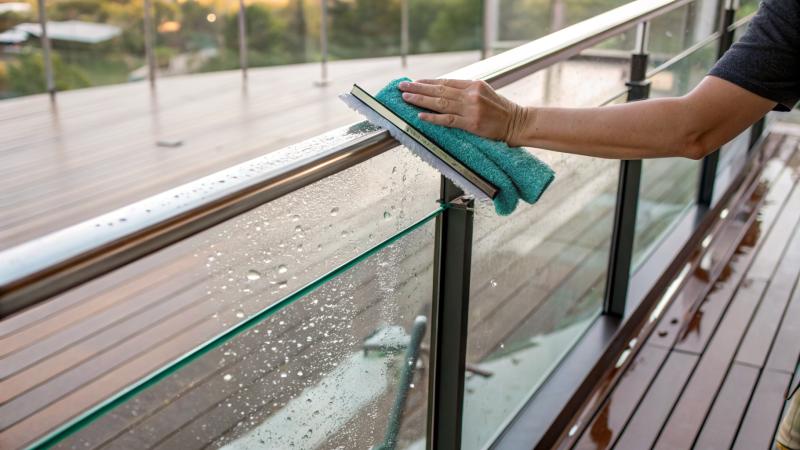
Rinse again with clean water, then squeegee immediately, top to bottom, wiping the blade after each pass. Finish the edges and any missed streaks with a dry microfibre cloth.
Drying is not optional. Streaks and spots are not caused by the washing, they are caused by letting water evaporate on the glass and leaving its dissolved minerals behind.
How to Remove Hard Water Stains and Mineral Spots
Much of the Greater Toronto Area sits on hard water, and it shows up on glass railings in two ways: white spotting from sprinklers and hose rinsing, and a cloudy band along the lower edge of panels where runoff collects and evaporates.
The fix is chemical, not mechanical. Mix equal parts white vinegar and warm water, soak a microfibre cloth, and lay it flat against the stained area for several minutes so the acid has time to dissolve the deposit. Then wash normally with soap and water, rinse, and squeegee dry.
Scrubbing harder does the opposite of what you want. Mineral deposits are harder than they look, and abrasive pressure grinds them across the glass, leaving fine scratches that hold dirt and make the next stain worse.
If a vinegar soak does not lift the stain after two attempts, the deposit has likely etched into the glass surface. At that point it is a polishing job for a professional, not a cleaning job.
Cleaning and Protecting the Hardware
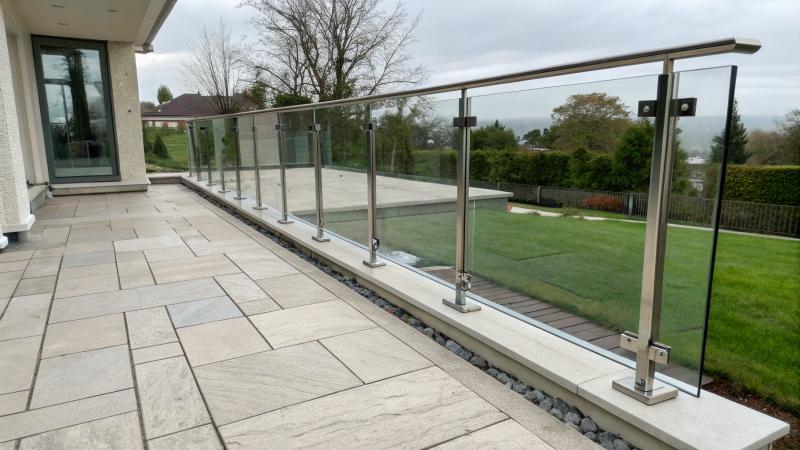
Stainless steel spigots, clamps, standoffs, and base shoe channels need their own attention, and glass cleaner does nothing for them.
Stainless steel is corrosion resistant, not corrosion proof. In a GTA winter, chloride from road salt breaks down the passive layer that protects the surface, producing the orange freckling often called tea staining. It looks like rust and it is entirely preventable with rinsing.
Wash hardware with the same mild soap solution, rinse thoroughly, dry it, and apply a stainless steel cleaner formulated for exterior use once or twice a year. Never use steel wool or a wire brush, which embeds carbon steel particles that then rust in place.
Seasonal Maintenance for GTA Winters
Ontario winters are the hardest thing a railing system faces. Freeze-thaw cycling, road salt carried on the wind, and ice loading all act on the same connections.
Before winter
Wash everything, dry it, and inspect each fastener. Clear leaves and debris from base shoe channels and from the gap beneath frameless panels so meltwater can drain instead of freezing in place.
During winter
Never use metal tools to chip ice off glass or hardware, and avoid rock salt on adjacent surfaces where spray will reach the railing. Sand or a chloride-free de-icer is a better neighbour to a glass railing.
After winter
Rinse thoroughly as early as the weather allows, then inspect gaskets, spigot bolts, and clamp fasteners. Winter is when fasteners loosen, and spring is when you find out.
Mistakes That Permanently Damage Glass Railings
A pressure washer is the fastest way to ruin a glass railing. The pressure drives water past gaskets and seals, and at close range it can chip glass edges and strip the finish off hardware. It also forces debris into the base shoe channel rather than out of it.
Ammonia based cleaners degrade the gaskets, setting blocks, and structural sealants in framed and frameless systems alike. Abrasive pads and scouring powders leave a haze of micro-scratches that never comes out. Razor blades, often recommended for windows, will scratch coated glass.
The pattern is consistent: the aggressive approach fixes today's smudge and creates a permanent one.
When to Call a Professional
Some findings are maintenance items and some are structural. Call an installer if you find a chip or crack in any panel, a spigot or clamp that moves when you push the railing, visible gaps opening between a panel and its hardware, or a base shoe channel holding standing water.
A cracked panel in a guardrail is a safety issue, not a cosmetic one. Tempered glass fails suddenly rather than gradually, and a damaged panel should be replaced rather than monitored.
The Short Version
Wash every four to six weeks with mild soap and water, squeegee dry every time, treat mineral stains with diluted vinegar instead of pressure, rinse salt off before spring, and inspect the hardware twice a year. Glass railings reward a light routine and punish an aggressive one.
HMJ Railings installs and services aluminum, framed glass, and frameless glass railings across Vaughan, Woodbridge, Maple, Toronto, Markham, Richmond Hill, and the surrounding GTA. If a panel or fitting on your railing does not look right, request a free estimate and we will take a look.
Frequently Asked Questions
How often should glass railings be cleaned?
Every four to six weeks for typical residential use. Increase to weekly during pollen season, and wash as early as possible in spring to remove winter road salt before it has time to etch the glass or stain the hardware.
Can I use Windex or other glass cleaner on glass railings?
Avoid any cleaner containing ammonia. It degrades the gaskets, setting blocks, and structural sealants that exterior railing systems depend on. Warm water with a few drops of dish soap cleans just as well without attacking the system.
Will a pressure washer damage glass railings?
Yes. Pressure drives water past seals and gaskets, can chip glass edges at close range, strips the finish from hardware, and forces debris into base shoe channels. Use a garden hose and a soft cloth instead.
How do I remove hard water stains from glass railings?
Soak a microfibre cloth in equal parts white vinegar and warm water and hold it against the stain for several minutes, then wash, rinse, and squeegee dry. If two attempts fail, the deposit has etched the glass and needs professional polishing.
Do frameless glass railings need more maintenance than framed ones?
Not more, but different. Frameless systems have fewer places for dirt to hide, so the glass shows more. Their spigots and base shoe channels need regular debris clearing so meltwater drains rather than freezing against the hardware.
Why is my stainless steel railing hardware turning orange?
That is tea staining, caused by chloride from road salt breaking down the protective layer on stainless steel. It is surface level and preventable. Rinse hardware thoroughly each spring and apply an exterior stainless steel cleaner once or twice a year.
About the Author

Joseph Cariati
Founder & Owner of HMJ Railings. With over 10 years of experience and 2,000+ completed projects, Joseph and the HMJ team have built lasting relationships with homeowners and builders across Vaughan and the GTA, earning a reputation for reliability and quality work.