TLDR
Railings rarely move an appraised home value on their own, but they strongly influence what buyers believe about a home's upkeep. The best return comes from front entry and deck guards that are solid, current in style, and free of rust or spacing problems. For GTA homeowners, replacing a failing railing before listing costs less than negotiating it away after an inspection.
Key Takeaways
- -A railing rarely changes an appraisal, but it changes what a buyer believes about the rest of the house.
- -Front entry railings return the most per dollar because they are the shortest run and the first one a buyer touches.
- -Frameless glass pays back where there is a real view to protect, and wastes money where there is not.
- -Powder-coated aluminum holds its colour for decades; painted steel and older wrought iron start showing rust within a few Ontario winters.
- -A guard that fails the 100 millimetre sphere spacing rule becomes a negotiation item on the buyer's inspection report.
- -Replacing a failing railing before listing costs less than crediting a buyer for it after.

Joseph Cariati
Founder & Owner of HMJ Railings. With over 10 years of experience and 2,000+ completed projects, Joseph and the HMJ team have built lasting relationships with homeowners and builders across Vaughan and the GTA, earning a reputation for reliability and quality work.
What "Value" Means When You Are Talking About a Railing
A railing affects home value in two separate ways, and homeowners tend to blend them together.
The first is appraised value, the number a bank or an appraiser writes down. A railing on its own almost never moves that number.
The second is sale value, which is what a buyer will actually pay after walking the property. Railings move that number more than their cost suggests they should.
A railing is a guard. Its job is to keep a person from falling off a raised surface, and every other effect it has comes from where that job puts it.
Guards sit at the front steps, the porch, and the deck. Those are the three places where a buyer stops walking and looks around.
Why Railings Change Buyer Behaviour Instead of Appraisals
Buyers do not price a railing. They price the impression it creates about the rest of the house.
A guard that wobbles, rusts, or clashes with the siding reads as deferred maintenance. Once a buyer decides a house has been neglected, they start hunting for other problems, and they find them.
The same effect runs in the other direction. A plumb, clean, well-finished railing tells a buyer the visible parts of the house were kept up, which makes the parts they cannot see easier to trust.
This is why railing work comes up in pre-listing conversations far more often than in appraisals. It changes showings, not comparables.
The Four Things Buyers Actually Notice About a Railing
Whether it moves
A guard that shifts when someone leans on it is the fastest way to lose confidence in a house. Buyers test railings without deciding to, usually with one hand on the way up the front steps.
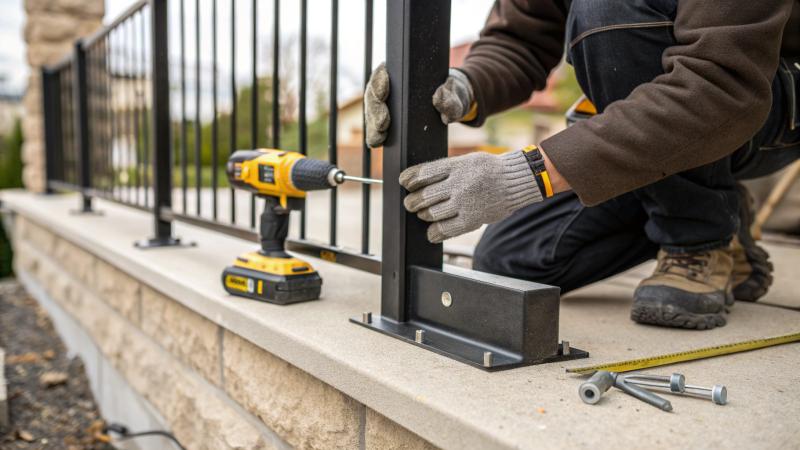
Movement almost always starts at the footing or the fastener rather than the railing itself. That distinction matters, because a re-anchor costs a fraction of a replacement.
Whether the finish is holding
Powder-coated aluminum keeps its colour for decades because the finish is baked onto metal that cannot rust. Painted steel and older wrought iron do not have that advantage in Ontario winters.
Chalky, flaking, or rust-streaked railings age a house at a glance, no matter what year it was actually built.
Whether it matches the house
Ornate scrolled iron on a flat-roofed modern build looks like a leftover from a different property. A plain picket run on a heavily detailed century home looks unfinished.
Matching style to architecture costs nothing extra at the quoting stage. It is a decision, not an upgrade.
Whether it blocks something worth seeing
On a raised deck facing a ravine, a pool, or a mature backyard, solid pickets remove the exact thing the buyer stepped outside to look at.
On a ground-level deck facing a fence, there is no sightline to protect, and a picket run is the sensible choice.
Where Railing Money Pays Back Best: The Front Entry
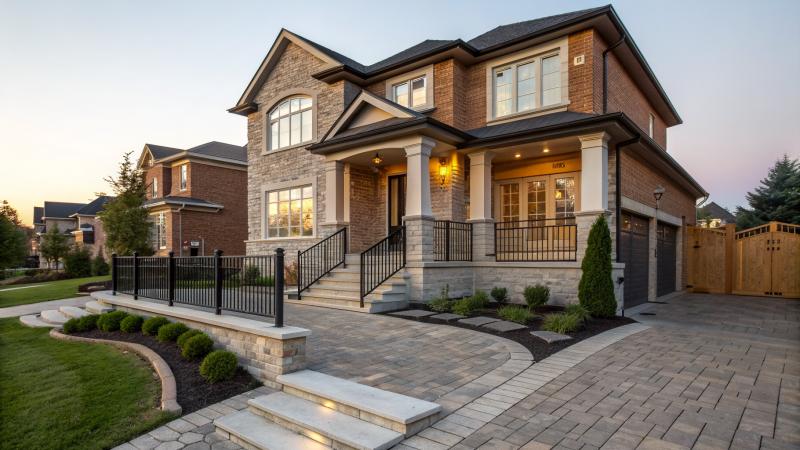
The front entry guard returns more per dollar than any other railing on a house. It is usually the shortest run on the property and the first one a buyer touches.
Front steps also set the order of judgement. Everything a buyer sees after the front door gets graded against the impression formed on the way in.
Because the run is short, upgrading it stays affordable in a way a full deck rebuild does not. Replacing eight feet of tired railing at the porch changes the first photo on the listing.
HMJ Railings has completed more than 2,000 railing projects across the Greater Toronto Area over more than 10 years under founder Joseph Cariati, covering front entries, porches, decks, balconies, and pool surrounds.
Volume like that makes one pattern hard to miss. Railings get bought for safety or for looks, but they get replaced because of weather, and weather goes after the footing first.
Where Glass Railings Earn Their Cost
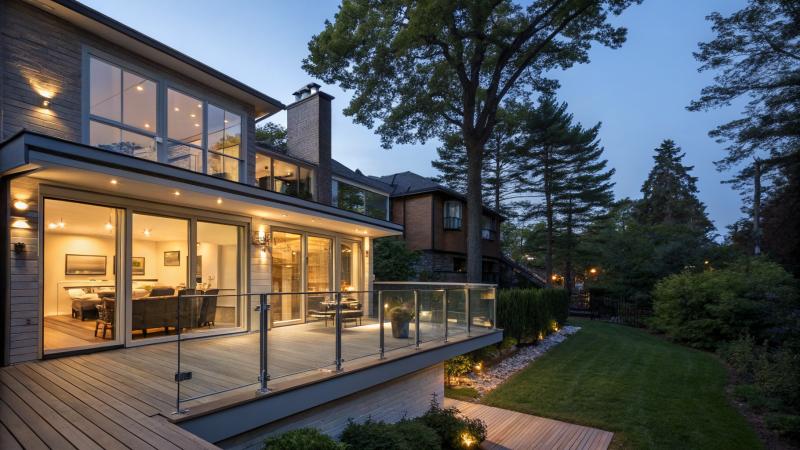
Glass railings pay back when there is a view worth keeping. A raised rear deck, a ravine lot, a pool surround, or a walkout basement all qualify.
The mechanism is simple. Glass removes the visual barrier between the deck and the yard, so both read larger than they measure.
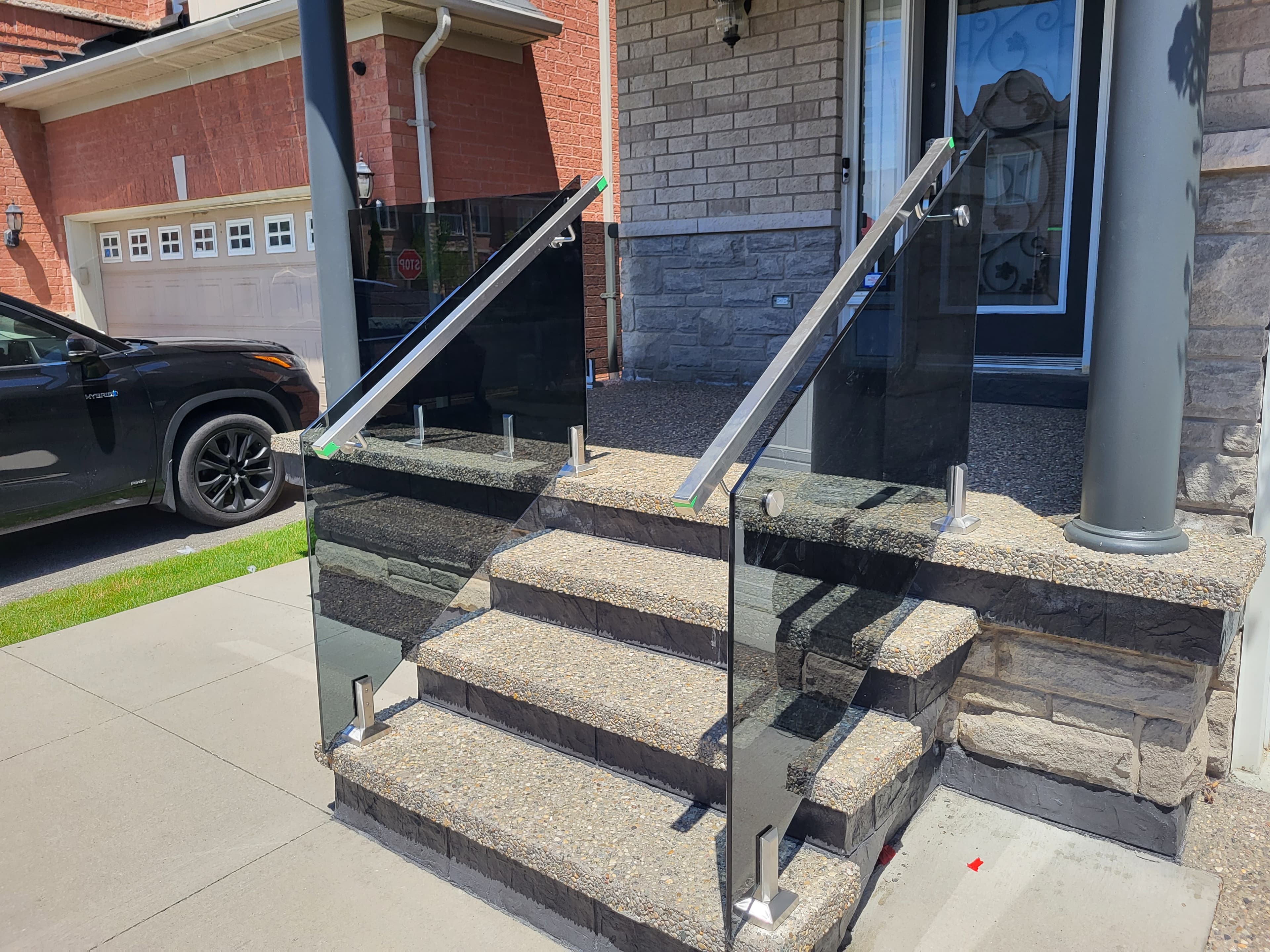
Frameless systems on spigots or a base channel do this best, because no top rail cuts across the sightline. Framed and clamp-held systems cost less and still open the view, with a visible frame as the trade.
On a shaded, ground-level deck facing a fence, glass buys nothing a buyer will pay for. It also adds a cleaning job that some buyers count against the house.
Where Railing Spending Does Not Come Back
Over-speccing a low deck is the most common waste. A guard 500 millimetres off the ground does not need a system built for a second-storey balcony.
Custom colours are the second. Anything outside black, bronze, or white narrows the buyer pool without adding a feature a buyer can name.
Decorative add-ons on their own are the third. Collars, scrolls, and rings only read as intentional when the rest of the exterior supports them.
What a Failing Guard Costs You at Closing
A buyer's home inspector checks guards on every raised surface. Missing guards, loose posts, and picket gaps wide enough to pass a 100 millimetre sphere all land in the report.
Once it is written down, it becomes a negotiation item. Buyers rarely ask for the price of the repair; they ask for a credit that covers the repair plus the trouble of arranging it.
That gap is why the same work is cheaper before listing. Fixing a railing on your own schedule is a line item. Fixing it under a conditional offer is a discount.
Railings and Resale Across Vaughan and the GTA
Vaughan, Woodbridge, Maple, and Kleinburg have a high share of homes with raised front entries, interlocking stone porches, and rear walkouts. Those features all require guards, so railings are visible on nearly every property in the market.
When most comparable listings show clean black aluminum or glass, a rusted railing does not read as neutral. It reads as the outlier.
Ontario winters set the pace of failure. Freeze-thaw cycles, road salt tracked onto porches, and shovel contact work on fasteners and footings, which is why most GTA railing replacements start at the base rather than the top.
How to Spend a Railing Budget Before You Sell
Start with anything that moves or fails spacing. Safety items turn into negotiation items, so they are never optional.
Fix the front entry next. Shortest run, highest visibility, cheapest way to change a first impression.
Match the finish across the property after that. A black front railing and a white deck railing on the same house looks unplanned even when both are in good condition.
Save glass for the elevation that actually has a view. If no elevation qualifies, put the money into a clean aluminum run and stop there.
The Short Version After 2,000 Projects
Railings do not add a number to an appraisal. They protect the number you are asking for, by removing the reasons a buyer has to doubt the house.
The homes that get full value out of railing work are the ones where the guard is solid, the finish is current, and nothing about it invites a second look.
Frequently Asked Questions
Do railings increase home value?
Railings rarely raise an appraised value on their own. They influence sale value by shaping a buyer's first impression of upkeep. A solid, current railing at the front entry supports your asking price, while a rusted or wobbly one invites negotiation.
Are glass railings worth it for resale?
Glass railings are worth it where there is a view worth protecting, such as a raised deck, a ravine lot, or a pool surround. On a shaded ground-level deck facing a fence, the extra cost rarely comes back at sale.
Should I replace my railing before selling my house?
Replace it if it moves, shows rust, or fails the 100 millimetre sphere spacing rule. Home inspectors flag those items, and the credit a buyer asks for is usually larger than the cost of doing the work beforehand.
How long do aluminum railings last in Ontario?
Powder-coated aluminum railings routinely last decades in Ontario weather, because aluminum does not rust and the finish is baked on. Salt, freeze-thaw cycles, and shovel contact damage fasteners and footings long before the metal itself gives out.
What railing colour is best if I plan to sell?
Black is the safest choice for resale across the GTA, because it matches most window frames, door hardware, and roof lines. Bronze works well on warmer brick. Bright or unusual colours narrow your buyer pool for very little gain.
Which railing upgrade gives the best return?
The front entry guard gives the best return per dollar. It is the smallest run of railing on most homes, the first one a buyer touches, and the one that sets expectations for everything they see afterward.
About the Author

Joseph Cariati
Founder & Owner of HMJ Railings. With over 10 years of experience and 2,000+ completed projects, Joseph and the HMJ team have built lasting relationships with homeowners and builders across Vaughan and the GTA, earning a reputation for reliability and quality work.